Voltage protection
Legal & Technical Advisory

Legal Disclaimer & Engineering Limitations

Essential terms governing electrical safety advice, surge protective device specifications, installation prerequisites, and liability boundaries for residential voltage solutions.

01

Informational & Educational Scope

Advisory Status & Baseline Application

All materials, circuit topologies, voltage calculation tables, response curve models, and configuration diagrams provided on this platform are compiled strictly for general educational and informational purposes. While Coregic strives to maintain accurate technical data reflecting current residential electrical practices in the United States, no representation or warranty is made regarding comprehensive site-specific compatibility.

Grid transients, localized lightning strikes, high-frequency utility switching surges, and sustained overvoltage situations vary significantly across local distribution networks. Content presented herein does not constitute a bespoke electrical engineering commission or formal on-site diagnostic endorsement.

02

Professional Engineering & NEC Code Compliance

National Electrical Code (NEC) & Jurisdiction Authority

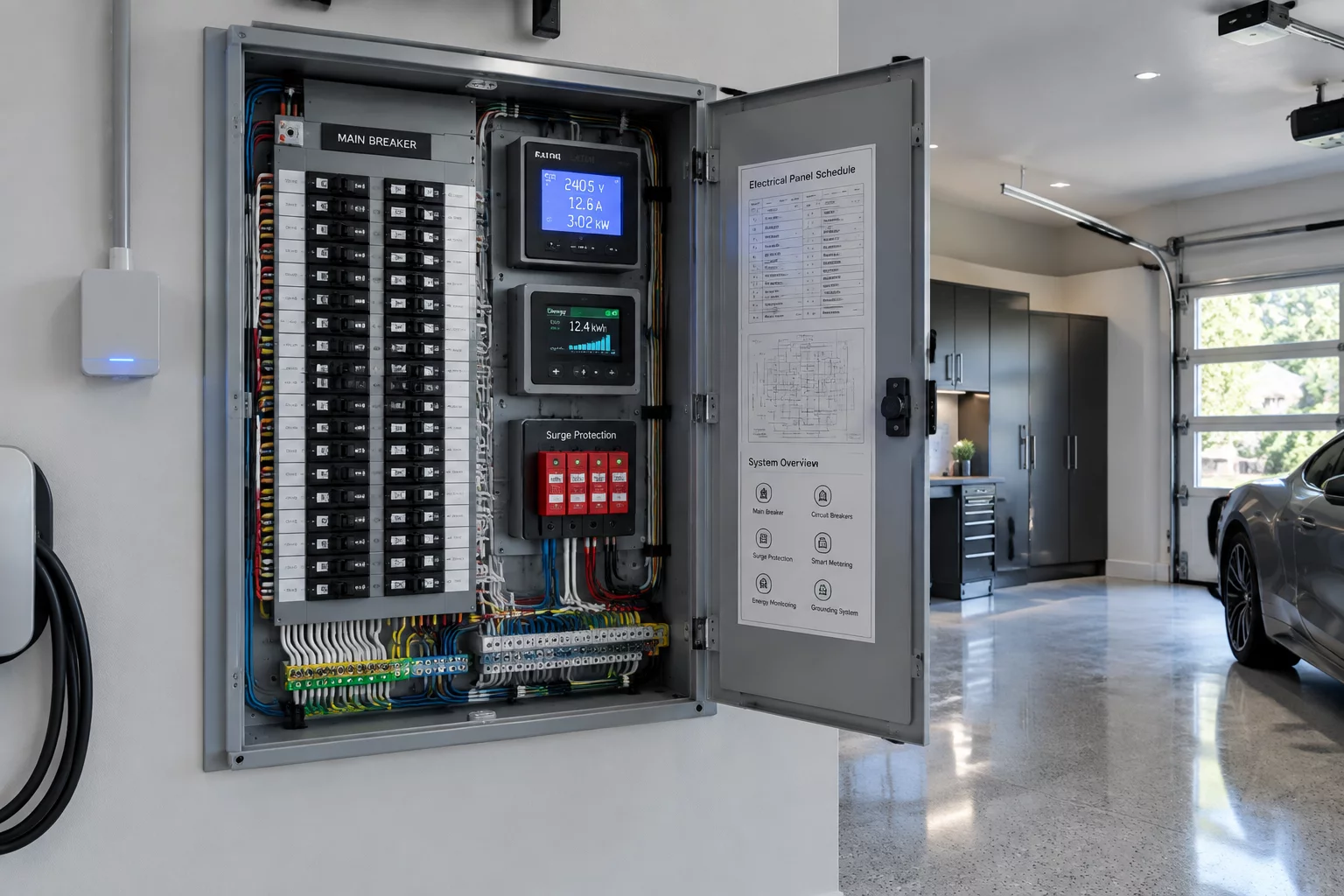
Electrical work involving residential main breaker panels, 120/240V split-phase distribution, Type 1/Type 2 Surge Protective Devices (SPDs), automated voltage regulation equipment, and continuous monitoring relays carries intrinsic hazards, including high-voltage shock, arc flash risk, and fire danger.

Licensed Installation Requirement: All hardwired protection equipment installations, sub-panel integrations, and grounding rod impedance adjustments must be executed exclusively by licensed, certified master electricians in strict compliance with the latest NFPA 70 (National Electrical Code), IEEE C62.41 guidelines, and municipal building codes.

Coregic expressly disclaims any endorsement of uncertified self-installation (DIY) on main distribution boards, meter mains, or transfer switch interfaces.

03

Equipment Ratings & Dynamic Performance Variation

UL 1449 Ratings, Joules & Nanosecond Response Clamping

Published technical metrics—including Voltage Protection Ratings (VPR), Maximum Continuous Operating Voltage (MCOV), Nominal Discharge Current (In), clamping response intervals (<1ns / <20ms), and thermal runaway disconnection parameters—are derived from standardized manufacturer testing conditions (such as UL 1449 4th/5th Edition).

Real-world attenuation and suppression efficiency depend on external factors beyond system control, including:

  • Total lead length and wire inductance between panel busbars and SPD terminals.
  • Ground electrode system resistance and grounding conductor integrity.
  • Magnitude, rise time, and cumulative energy of catastrophic utility faults.
  • Progressive MOV (Metal Oxide Varistor) degradation from repetitive transient clamping.
04

Limitation of Liability & Indirect Damages

Legal Scope & Warranty Demarcation

Under no circumstances shall Coregic, its contributors, authors, or affiliated technical consultants be liable for any direct, indirect, incidental, consequential, special, or exemplary damages. This includes, without limitation, appliance failure, HVAC compressor burn-out, sensitive microelectronics breakdown, electrical panel damage, lost operational revenue, power downtime, or personal injury resulting from the reliance on or implementation of information published on this website.

Equipment selection calculators, sizing recommendations, and comparative matrices are provided on an “as is” and “as available” basis without express or implied warranties of merchantability, fitness for a specific purpose, or faultless operation during grid-level catastrophe events.

Questions Regarding Electrical Safety Codes?

Always consult your local municipal electrical inspector (AHJ) and an accredited electrical contractor before purchasing or retrofitting whole-home surge suppression equipment.