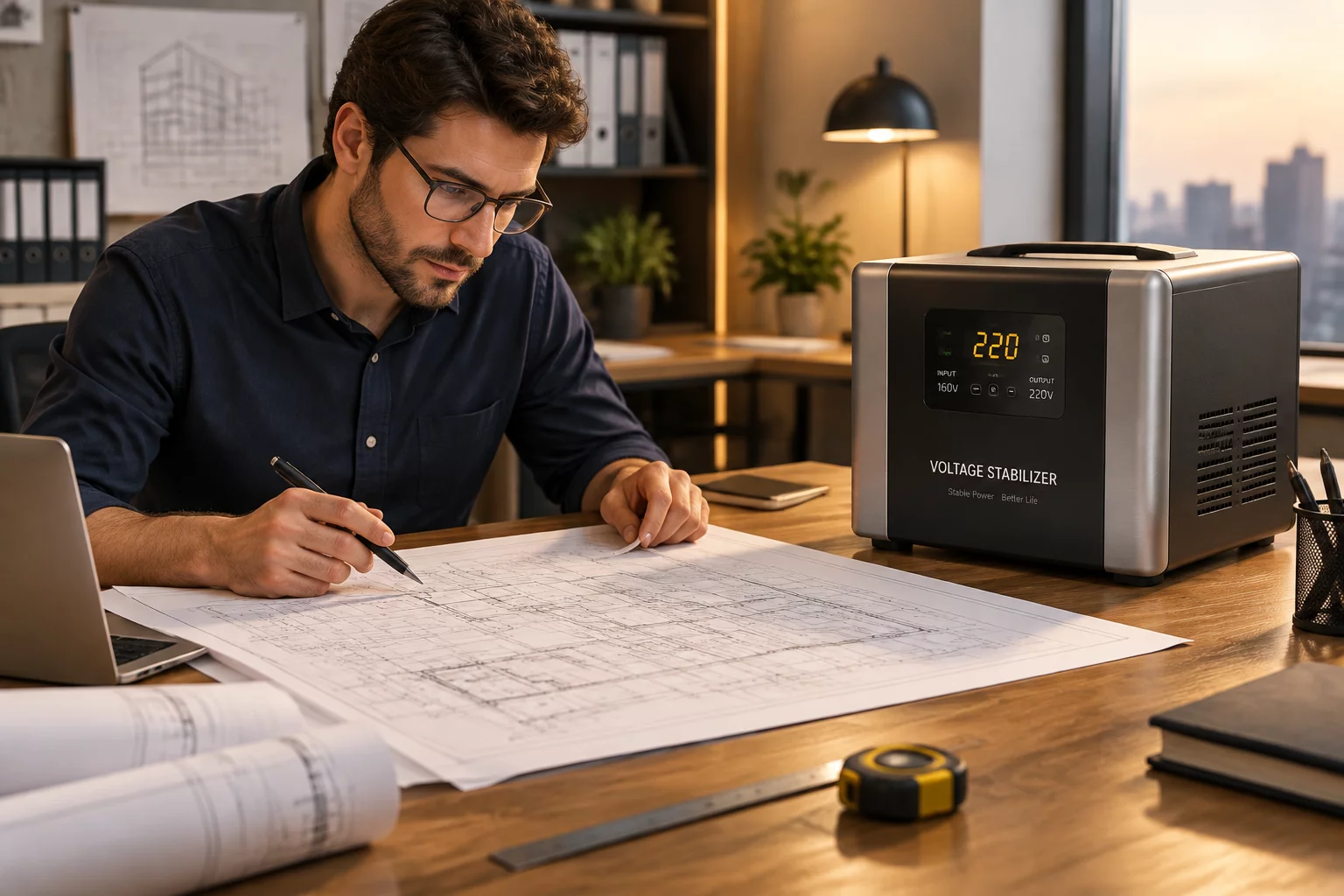
Residential electrical distribution frequently experiences steady-state voltage sags, chronic brownouts, and seasonal utility overvoltage conditions. Selecting an accurate automatic voltage stabilizer eliminates chronic thermal stress on compressors, variable speed motors, inverter appliances, and sensitive microprocessor controllers throughout modern households.
Dynamic Load Sizing and Apparent Power Profiling
Calculating total residential demand requires distinguishing nominal active power in kilowatts from inductive apparent power measured in kilovolt-amperes. Heat pumps, pool pumps, and refrigeration compressors draw up to five times their continuous running current during initial startup cycles. An undersized stabilizer trips frequently during sudden motor starts, while an excessively oversized unit causes avoidable idle core losses and elevated upfront installation costs.
Continuous operating loads demand an engineering headroom margin of at least 25% above cumulative simultaneous peak consumption. This prevents thermal cutoff when grid utility inputs drop below 100V AC under sustained local summer peak demands.
Servo-Motor Autotransformers vs. Solid-State Electronic Regulation
Engineering audits evaluate whether mechanical servo-driven stabilizers or solid-state electronic regulators match your electrical infrastructure. Servo-driven units provide pristine sinusoidal waveforms and exceptional voltage precision across wide swing bands. In contrast, triac-switched solid-state systems offer near-instantaneous correction speeds, making them ideal for areas with sudden industrial load cycling nearby.
- True RMS Microprocessor Sensing: Continuously samples incoming split-phase sine waves to correct gradual deviations within tight tolerance windows.
- Total Harmonic Distortion Minimization: Retains pure sine wave geometry without generating high-frequency electrical noise across smart home networks.
- Integrated Automatic Maintenance Bypass: Internal motorized contactors isolate the stabilization circuit for servicing without interrupting household utility feeds.
Multi-Tier System Integration with Surge Suppression and Relays
Voltage stabilizers operate in concert with primary whole-home surge protective devices and secondary cutoff voltage relays. While the stabilizer maintains steady-state voltage balance between 115V and 125V AC, primary surge arresters clamp kilovolt impulse transients, and voltage relays protect against catastrophic neutral loss. Our consulting process analyzes historical utility logs, circuit distribution diagrams, and panel configurations to deliver a cohesive, turn-key voltage defense blueprint.
Community Reviews & Diagnostics
Share technical insights & residential installation notes
No reviews yet. Be the first to leave a review.
Submit Your Diagnostic Review
Your input is processed and stored locally for electrical quality benchmark tracking.