
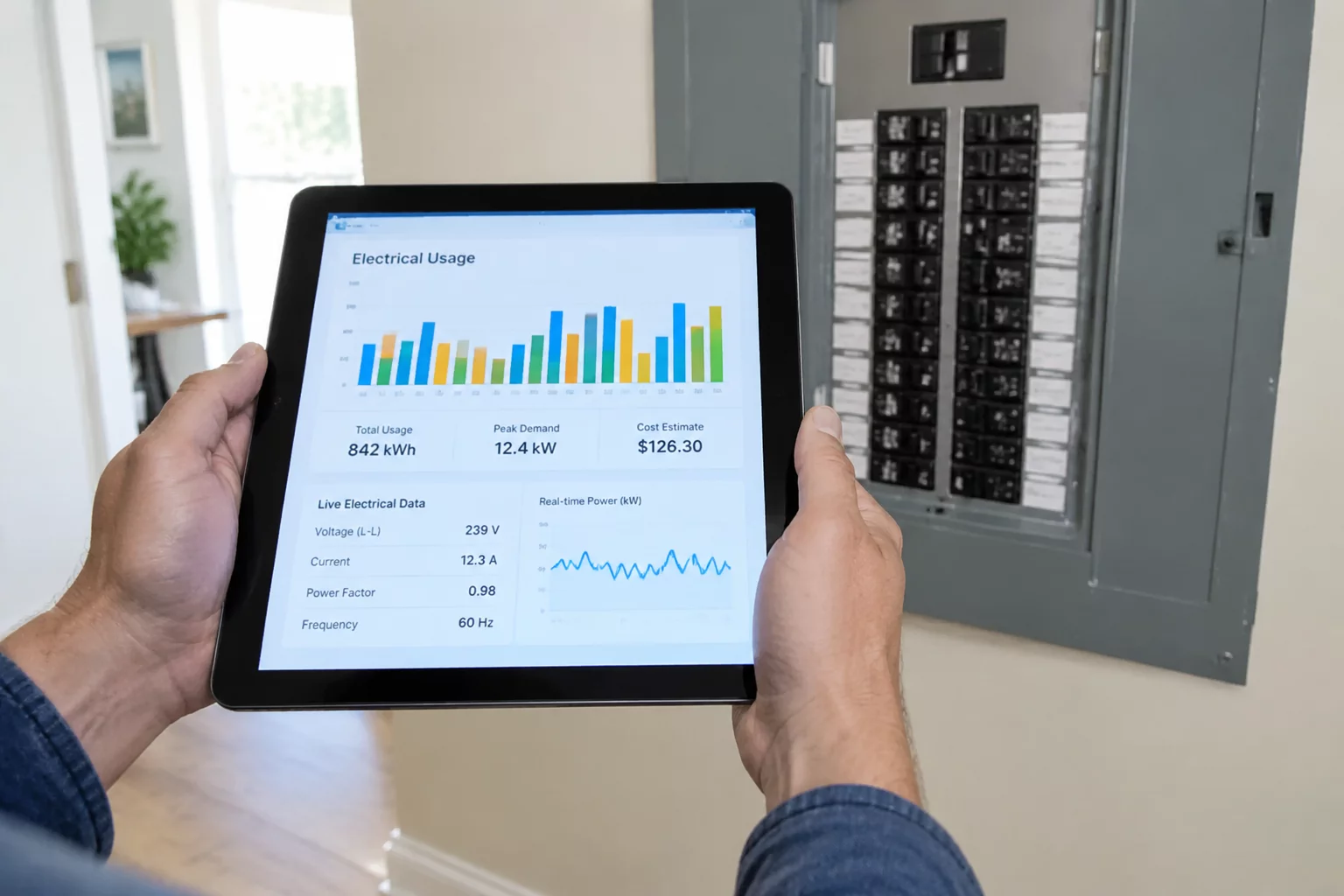
Selecting a residential voltage stabilizer requires balancing input voltage range, inrush power requirements, and correction response speed. Unlike simple surge strips that absorb single transient spikes, a voltage stabilizer continuously corrects persistent line fluctuations, sags, and brownouts to preserve high-value household electronics.
Determining Total Power Load and Sizing the KVA Rating
Calculate the total wattage of all equipment connected to the circuit simultaneously. Resistive loads such as electric heaters and water kettles draw steady power, whereas inductive loads such as air conditioner compressors, refrigerators, and heat pumps draw 3 to 5 times their running wattage during motor startup. Calculate the cumulative volt-ampere requirement and add a minimum 30 percent engineering buffer to prevent thermal trip hazards during extreme low-grid events.
When grid input voltage drops to 90V on a 120V nominal circuit, current draw increases proportionally for constant-wattage loads. Sizing a stabilizer strictly for nominal voltage will trigger premature breaker tripping under severe brownout conditions.
Evaluating Core Stabilizer Technologies
Three primary stabilizer architectures dominate modern residential installations, each offering specific tradeoffs between switching speed, precision, and operational noise:
- Static Solid-State Triac Stabilizers deliver ultra-fast correction speeds under 10 milliseconds with zero mechanical wear, making them ideal for sensitive audio-visual and home automation networks.
- Servo-Motor Controlled Regulators provide high output precision within ±1% across massive voltage swings, perfectly suited for heavy HVAC compressors and dedicated workshop machinery.
- Relay-Based Step Stabilizers offer cost-effective bulk regulation with broad input tolerances between 95V and 260V for general household utility circuits.
Crucial Safety Features and Thermal Safeguards
Ensure the chosen stabilizer includes zero-crossing switching circuits to eliminate harmonic distortion and prevent contact arcing. Integrated over-temperature sensors, automatic time-delay reconnect cycles after utility outages, and dual digital diagnostic displays give property owners full visibility into actual grid health and load demand.
Community Reviews & Diagnostics
Share technical insights & residential installation notes
Marcus Vance
Verified ClientFacilities Director • 400A Service Upgrade Review
The grid fluctuation audit and Type 1 SPD topology recommended by the engineering team resolved our transient surge issues instantly. Their mathematical modeling and load balance analysis saved us an estimated 28% in unneeded panel replacements.
Julian Taylor
Verified ReviewHomeowner • 10kVA Servo Stabilizer Setup
The sizing methodology outlined here completely changed how I calculated compressor starting power. We avoided undersizing our central HVAC regulation unit and have experienced flawless 120V regulation all summer.
Submit Your Diagnostic Review
Your input is processed and stored locally for electrical quality benchmark tracking.