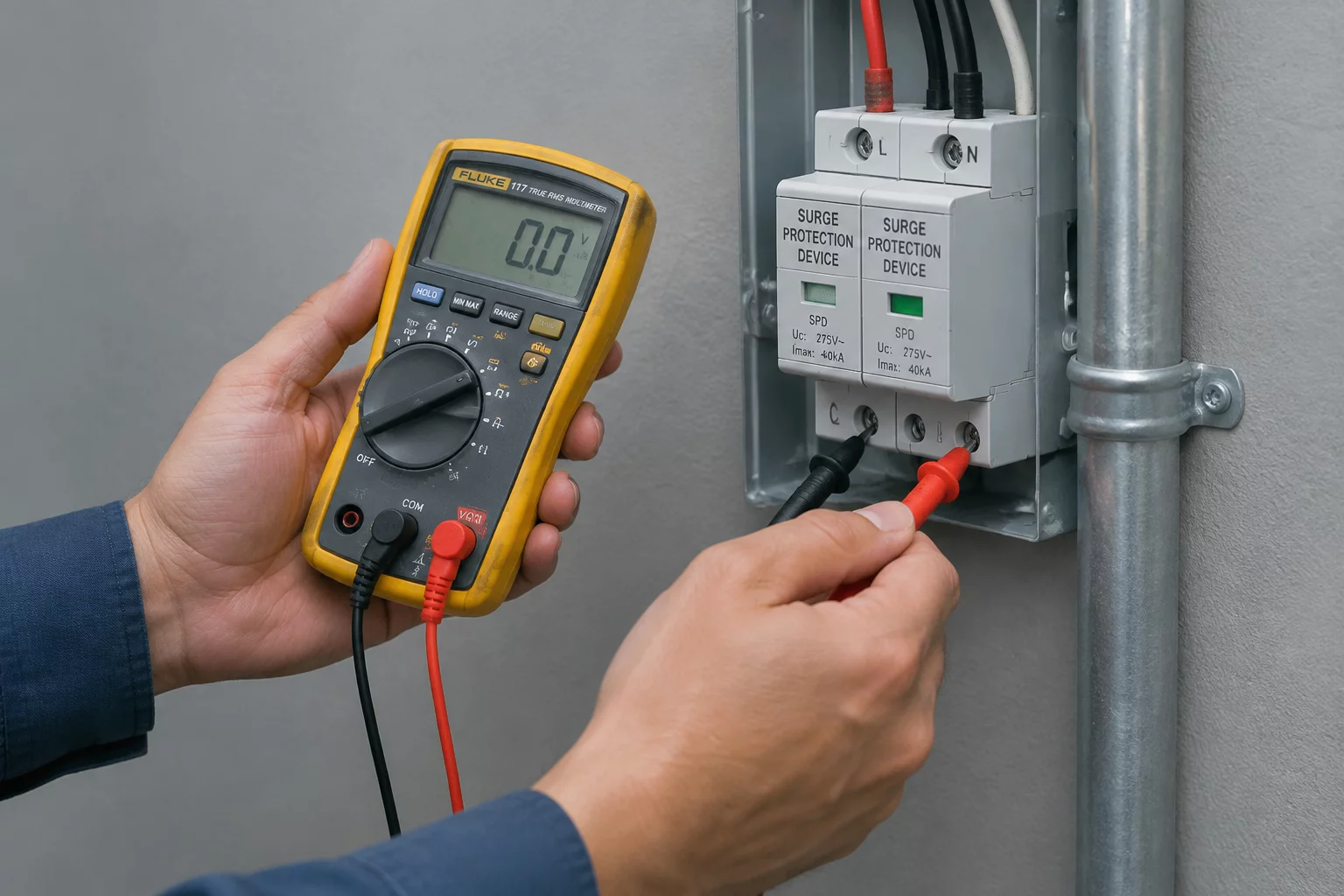
Whole-home surge protective devices (SPDs) absorb cumulative high-energy micro-surges across daily utility switching and adverse atmospheric events. Over time, internal metal oxide varistors (MOVs) degrade in capacity without triggering obvious mechanical warnings. Scheduled surge protection maintenance ensures early identification of degraded suppression components before a severe transient impulse compromises valuable residential hardware.
Degradation Dynamics of Metal Oxide Varistors
Each voltage clamp cycle shaves microscopic grain boundaries from the zinc oxide matrix inside standard SPD modules. While diagnostic indicator LEDs may still glow green, the nominal discharge current rating (In) drops progressively. Routine testing measures leakage current and nominal clamping threshold under controlled bench impulses, confirming whether the active module continues to satisfy ANSI/UL 1449 4th Edition safety parameters.
Grounding path resistance exceeding 25 Ohms significantly diminishes SPD clamping effectiveness. Periodic inspection verifies both internal varistor health and physical low-impedance ground bonding at the service entrance panel.
Key Diagnostic Steps During Scheduled Service
Technicians execute a standardized sequence of non-destructive checks on the distribution panel and secondary suppressor blocks:
- High-precision micro-ammeter testing to verify minimal phase-to-ground leakage current.
- Thermal imaging inspection to uncover localized hotspots on thermal disconnect fuses.
- Torque verification on busbar connection lugs and neutral return paths to eliminate arcing risks.
Recommended Maintenance Frequency and Replacement Cycles
For geographic regions with elevated lightning frequency or unstable rural utility lines, bi-annual inspections provide maximum security against unmonitored equipment failure. Standard suburban configurations require full electrical diagnostics every 12 to 18 months, with cartridge replacements recommended after major localized lightning activity or when varistor leakage increases past allowable limits.
Community Reviews & Diagnostics
Share technical insights & residential installation notes
Submit Your Diagnostic Review
Your input is processed and stored locally for electrical quality benchmark tracking.